A straightforward FAQ for finding, understanding and evaluating academic research.
Research is an important part of nearly every collegiate course, yet finding credible and relevant sources can quickly become overwhelming. A traditional search engine may produce hundreds of thousands of results without clearly showing which sources actually share relevancy. Consensus AI helps simplify this process by searching academic research, summarizing major findings, and connecting students directly to the original studies. Through SMU Libraries, students can access Consensus at no additional cost. As a result, SMU students have access to a tool that can make research more efficient while still requiring careful reading, source evaluation, and critical thinking.
What is Consensus AI?
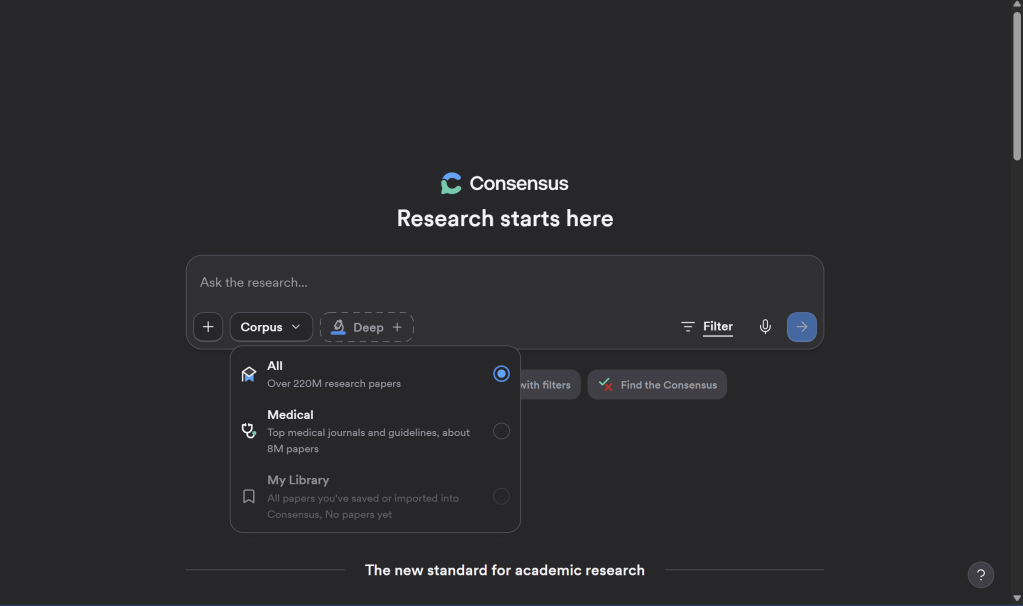
Consensus AI is an academic search engine designed to help users find and understand scholarly research. Unlike a traditional search engine that may provide thousands of loosely related results, Consensus searches more than 220 million research papers and uses artificial intelligence to summarize the most relevant findings. Each response connects its claims to identifiable studies, which allows students to trace the information back to its original source. Thus, Consensus can make the beginning of the research process less overwhelming while still allowing students to examine the evidence for themselves.
Is Consensus AI free for SMU students?
Yes, Consensus is available to SMU students at no additional cost through SMU Libraries. Students can create an account using their SMU email address, which provides access through the university’s institutional subscription. This gives students more access than they would receive through the limited public version of Consensus. The SMU Libraries guide to Consensus provides additional instructions for accessing the platform and using its features. Therefore, students should use their university email instead of creating an account with a personal address.
How is Consensus different from ChatGPT or Google Scholar?
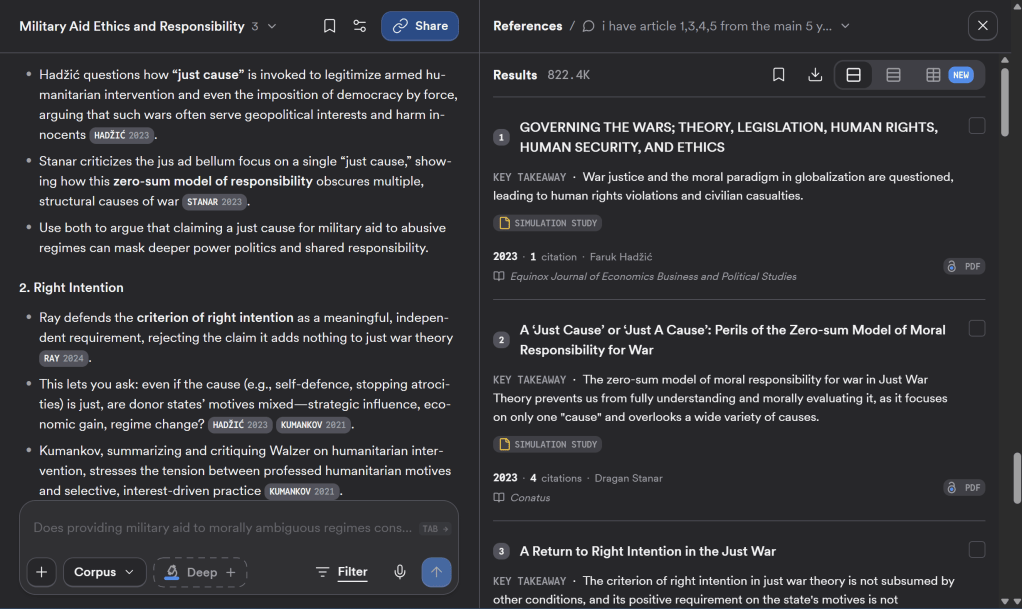
Although all three tools can assist with research, they serve different purposes. ChatGPT is a general-purpose AI tool that can explain concepts and generate ideas, but it does not always provide reliable citations. Google Scholar helps users locate academic material, yet students must sort through the results and determine which studies answer their questions. Consensus combines parts of both approaches by locating academic papers and summarizing their findings. More importantly, it allows users to see which study supports each claim instead of presenting an answer without visible evidence.
How can an SMU student use Consensus for an assignment?
Students can use Consensus during several stages of the research process. It can help someone explore an unfamiliar subject, narrow a broad topic, develop a research question, or locate studies for a literature review. For example, a communications student could ask how social media affects political identity and then examine research representing different findings. Students can also filter results by factors such as publication date or study type. These features make Consensus especially helpful when an assignment requires academic evidence instead of general online information.
Can I cite Consensus in a research paper?
Students should cite the original study rather than treating the Consensus summary as the final source. After finding a useful paper, they should open it, read the relevant section, and confirm that it supports the claim they plan to make. This step matters because a short AI-generated summary cannot include every qualification or limitation found in the complete study. Students should also follow their professor’s rules regarding artificial intelligence. Consensus can improve the search process, but it does not remove a student’s responsibility to read and represent sources accurately.
Is the information on Consensus always accurate?
Consensus gives users a clearer path to its sources, but that does not mean every result is automatically correct or useful. Academic studies may rely on small samples, outdated information or methods that do not apply to a student’s specific topic. Research papers can also reach different conclusions about the same question. Students should compare multiple studies and consider each source’s author, publication date, methodology, and limitations. In other words, Consensus makes credible research easier to locate, but students must still evaluate the evidence critically.
Is Consensus AI worth using as an SMU student?
For students who regularly complete research-based assignments, Consensus can save time and make academic sources easier to understand. Nick Parkinson, an SMU graduate student in the MBA program, discovered this advantage after having difficulty locating dependable source information through ChatGPT.
“I have used ChatGPT in the past to find sources, but can never seem to get accurate page numbers or quotes. I found out about Consensus and gave it a try. I can genuinely say there is no better tool for research than Consensus AI,” Parkinson said.
His experience demonstrates the main value of Consensus. The platform cannot complete the entire research process for a student, but it can provide a stronger and more transparent place to begin.
 Clay Coughlin
Leave a comment